

Gold and Silver Recycling at Diehl Metal Applications
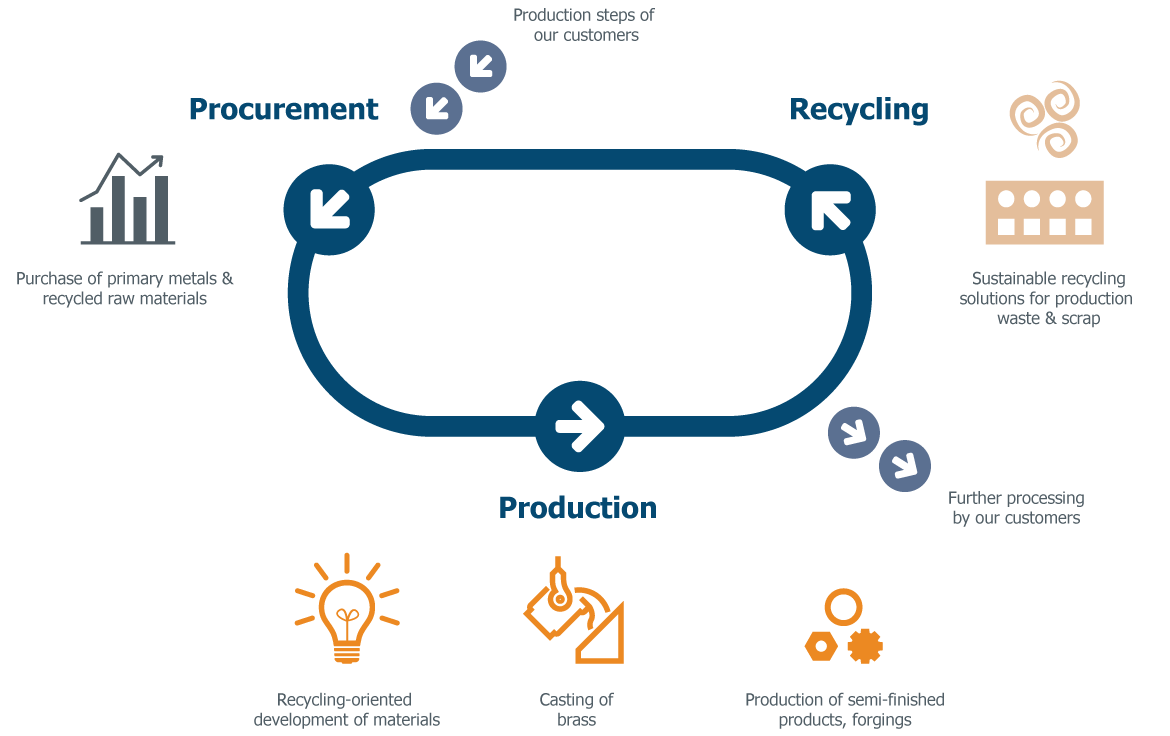
At Diehl Metal Applications (DMA) in Berlin, gold and silver coatings are not only applied with high precision to metallic strips but are also recovered directly within the production process. This creates a closed-loop system for precious metals within our electroplating operations.
Gold- and silver-containing rinse waters from the electroplating baths are transferred to our internal recycling unit. There, the precious metals are recovered from the solution and processed into gold and silver residues for further recycling. The remaining low-precious-metal waters are subsequently treated in the wastewater facility, where galvanic sludge is generated as part of the treatment process.
This sludge is handed over to a specialized external partner who further processes the remaining precious metal content into artificial ores (concentrates). Final metal recovery takes place at a refinery.
In 2025, more than 130 tonnes of galvanic sludge were processed through this route. This corresponds to savings of approximately 13,000 tonnes of primary ore.
By avoiding resource-intensive mining, this process offers significant potential for reducing CO₂ emissions and actively supports the circular economy.